For over a century, education ran like a train on a fixed schedule. The teacher drove the lesson forward at one speed. If you understood the concept, great. If you needed more time, the train left without you. Everyone read the same textbook, sat the same test, and was expected to learn the same way at the same pace.
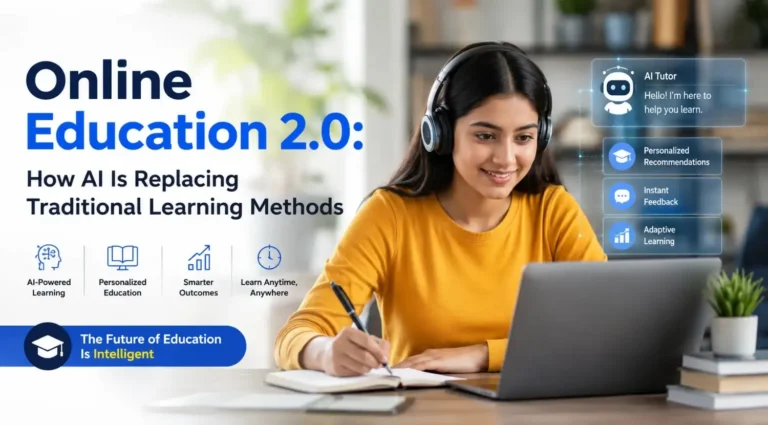
In 2026, that industrial-era model is being dismantled and what is replacing it is something fundamentally different. Call it Online Education 2.0: a learning system where AI adapts to each student moment by moment, where textbooks give way to interactive labs, where a tutor is available at midnight, and where the rigid one-size-fits-all classroom is finally bending to fit the learner instead of the other way around.
This article looks at how AI is replacing traditional learning methods, the real results behind the hype, and the serious questions this transformation raises about equity, privacy, and the irreplaceable role of human teachers.
What “Online Education 2.0” Actually Means
The first wave of online education Online Education 1.0 was essentially the old model delivered through a screen. Recorded video lectures. PDF textbooks on tablets. The same content, the same pace, the same passive experience, just digital. It was convenient, but it did not change how learning worked.
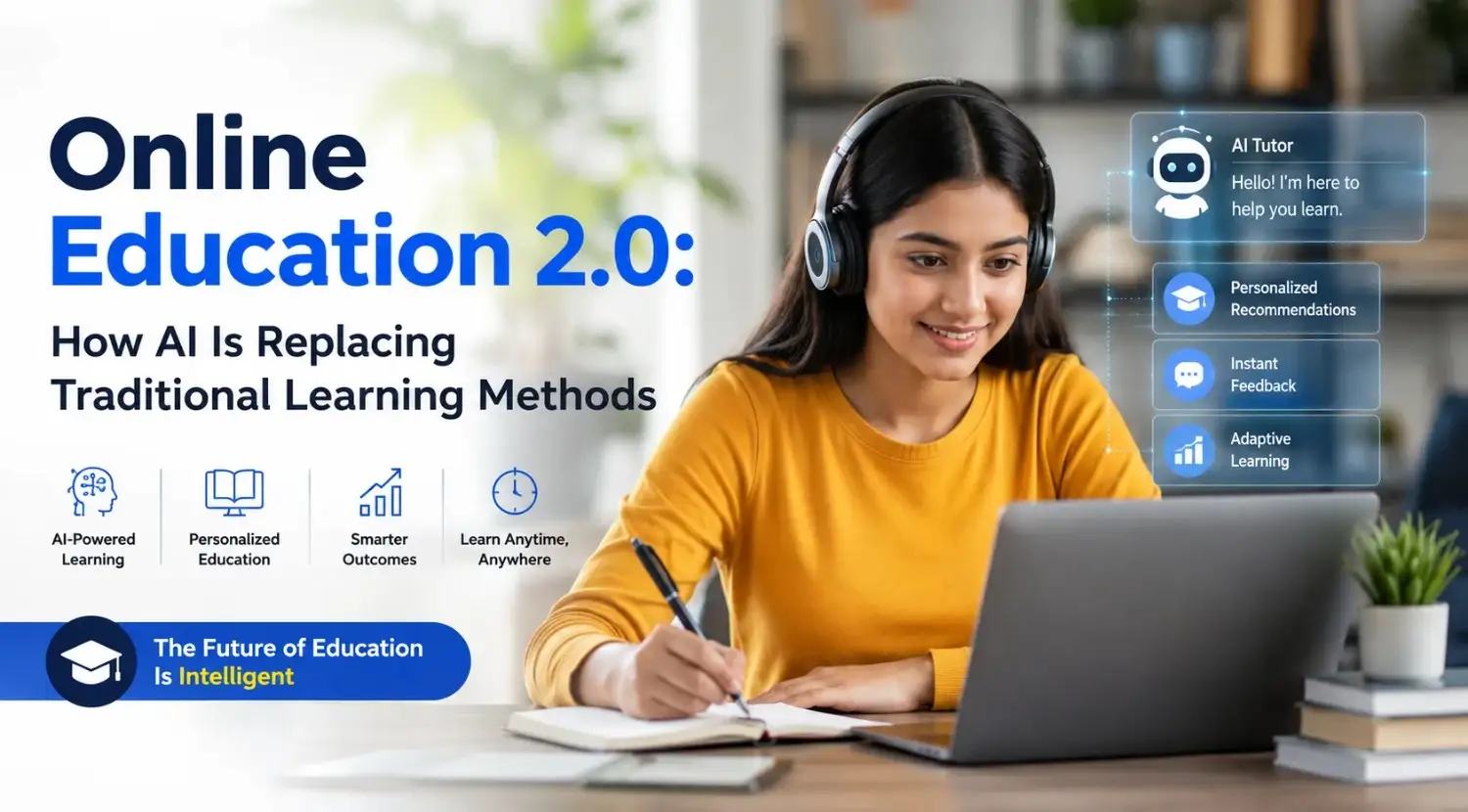
Online Education 2.0 is different in kind, not just in delivery. It is built on AI systems that actively respond to the individual learner. As one widely cited 2026 prediction put it, AI is moving beyond static personalisation to create truly adaptive learning paths that adjust in real time. The curriculum itself is being redesigned to bend, flex, and adapt to the exact pace of every single student.
That is the core shift: education is moving from a fixed broadcast to a responsive feedback loop.
The Traditional Methods AI Is Replacing
Several long-standing methods of teaching and learning are being directly displaced.
The fixed-pace lecture is being replaced by adaptive learning. AI systems now continuously track student interactions, performance patterns, and engagement signals, then adjust instructional content to match each learner. Students who struggle receive additional support automatically; advanced learners move ahead without waiting. The system identifies knowledge gaps in real time and corrects misconceptions before they solidify something a single teacher addressing thirty students simultaneously could never do.
The cover-to-cover textbook is becoming obsolete. The traditional approach of reading a textbook and hoping the information sticks is being replaced by interactive learning labs environments with runnable code editors, simulations, adaptive quizzes, and instant feedback. This matters most in STEM, which suffered worst under the “passive learning trap.” You cannot learn to build a bridge or write a compiler by watching a video. Interactive, hands-on environments let students learn by doing.
Office hours are being replaced by 24/7 AI tutoring. Intelligent tutoring systems now tutor learners at midnight, answer questions on demand, and deliver quick, focused bursts of practice and feedback exactly when students need them not three days later when a worksheet is returned.
Manual grading is being replaced by automated assessment. AI tools that evaluate written work, generate rubric-based scores, and produce targeted feedback at scale are now used by around 41% of educators surveyed. AI video and content tools have cut course production time from 80-plus hours to under five, with 67% of educators reporting they save 10 or more hours per week.
One-language instruction is being replaced by multilingual AI. Localised AI models now let students switch seamlessly between English and regional languages a student can read a theorem in English and ask the AI tutor to explain the logic in Hindi, Marathi, Tamil, or another native tongue. This removes the language barrier from the equation of intelligence itself.
The Results: What the Data Shows
The case for Online Education 2.0 is not just theoretical. The numbers behind it are significant.
The AI in education market is projected at roughly $12.3 billion globally in 2026, growing at a 36% compound annual rate since 2022. Adoption is accelerating fast: by 2026, an estimated 71% of higher education institutions will deploy adaptive learning platforms, up from just 34% in 2023. Around 83% of institutions plan to deploy AI teaching assistants by the end of 2026.
The outcomes data is the most compelling part. Carnegie Learning’s MATHia platform, used by over 600,000 students across 2,400 US schools, has demonstrated a 42% improvement in learning outcomes across more than a million students. NIH-funded research on neurodiversity-aware AI systems which adapt to ADHD, dyslexia, and autism spectrum learners shows 63% better outcomes for those students.
These are not marginal gains. They suggest that adaptive, personalised learning can genuinely address failures that the traditional model never solved.
The Emerging Frontiers
Online Education 2.0 is still evolving rapidly, and several frontiers are taking shape in 2026.
Cross-institution learning profiles portable learner models that follow students across schools, somewhat like a credit score for learning so a new school instantly understands how a student learns best.
Emotional intelligence integration affective computing systems that detect frustration, confusion, or disengagement and adjust accordingly.
Immersive learning VR, XR, and hybrid models that blend in-person teaching with virtual experiences, increasingly mainstream as schools seek deeper engagement.
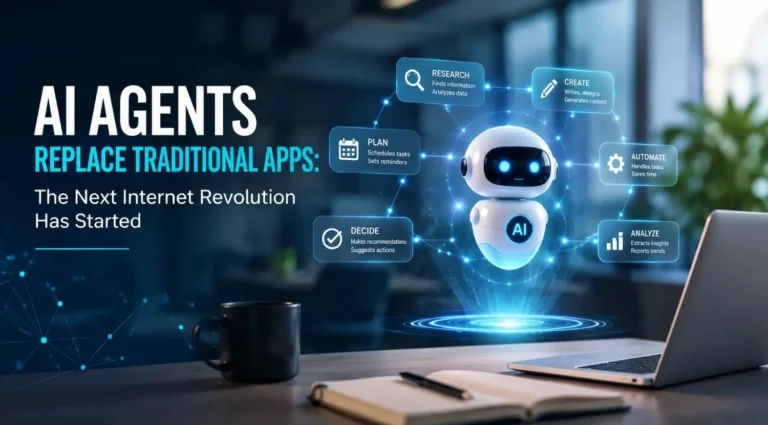
Unified platforms tools that eliminate the fragmentation of juggling separate apps, generating equations, code editors, adaptive assessments, slides, and personalised learning paths from a single prompt.
The Crucial Caveat: AI Is Not Replacing Teachers
Here is where the headline “AI is replacing traditional learning methods” needs an important clarification. AI is replacing traditional learning methods the fixed-pace lecture, the passive textbook, the one-size-fits-all test. It is not replacing teachers.
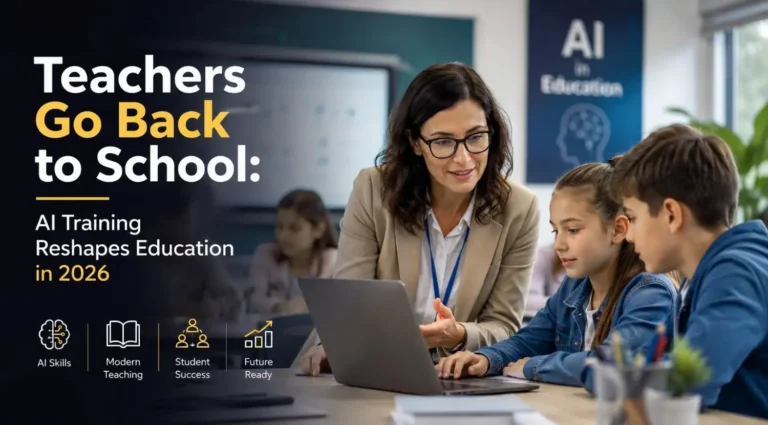
The 2026 consensus among education researchers is emphatic on this point. AI tutoring expands without replacing teachers. Rather than substituting for educators, AI serves as a real-time assistant generating differentiated lesson prompts, suggesting standards-aligned resources, producing bilingual mini-lessons, and flagging at-risk students before a teacher notices the signs. Teachers edit, approve, and deliver, adding the human context and connection that AI cannot replicate.
As one research framework put it, integrating teacher expertise into AI tool design lets these systems amplify teachers’ capacity to teach creating benefits that exceed what either teachers or AI could achieve alone.
There is even an argument that AI is helping save the teaching profession. By stripping away the administrative burden grading, paperwork, repetitive content creation AI returns the job to its core essence: inspiring and mentoring young minds. Some 2026 analyses link this shift to an easing of the teacher shortage crisis, as the role becomes more human, not less.
The most accurate description of Online Education 2.0 is not “human replaced by machine.” It is “a human, empowered by a machine.”
The Risks That Cannot Be Ignored
A clear-eyed look at this transformation has to confront its real dangers.
Data privacy and algorithmic bias. Adaptive systems work by continuously tracking detailed data on every student performance, behaviour, engagement, even emotional state. Around 71% of educators cite data privacy and algorithmic bias as their top risks, according to UNESCO. If an algorithm is biased, it can systematically misjudge or mis-serve certain groups of students. Granular privacy controls and transparent data policies are not optional extras they are prerequisites.
The digital divide. Well-resourced schools and students get premium AI tools, strong connectivity, and the full benefit of adaptive learning. Under-resourced schools risk being left further behind. As the UN Special Rapporteur on the Right to Education has stressed, the digitalisation of education must be geared toward better implementing the right to education for all not toward deepening inequality.
Over-reliance and lost skills. If students lean on AI tutors for every answer, there is a genuine risk of eroding independent problem-solving, struggle tolerance, and critical thinking the very capacities education exists to build. Adaptive learning is a powerful supplement to good teaching, not a replacement for the productive difficulty that real learning requires.
The end of the novelty era. Encouragingly, 2026 marks a maturing of the field. The novelty era of AI in education is over districts are now prioritising solutions that measurably improve student outcomes, relevance, and wellbeing, rather than adopting AI for its own sake. That discipline is healthy.
What This Means for Students, Parents, and Educators
For students, the shift rewards a new approach to learning. The most successful learners in 2026 treat their education as a feedback loop using adaptive tools to find gaps, get instant feedback, and iterate, rather than passively consuming content and hoping it sticks.
For parents, the right questions have changed. Beyond “is my child using technology?” the questions are now “does this tool genuinely adapt to my child?”, “how is my child’s data protected?”, and “is my child still building independent thinking skills?”
For educators, the message is one of empowerment paired with adaptation. AI handles the mechanical load; teachers do the human work of mentoring, motivating, and connecting. But realising that benefit requires training, thoughtful tool selection, and a commitment to keeping the human relationship at the centre.
The Bottom Line
Online Education 2.0 is real, and it is replacing traditional learning methods that have underserved students for generations. The fixed-pace lecture, the passive textbook, the one-size-fits-all test, the language barrier, the three-day feedback delay AI is dismantling all of them, and the outcomes data suggests students are genuinely better off for it.
But the transformation succeeds only if it is handled wisely. The technology must adapt to learners without surveilling them unfairly, reach under-resourced students rather than abandoning them, and support independent thinking rather than replacing it. And it must keep teachers at the heart of education not as casualties of automation, but as the irreplaceable human element that machines amplify but can never become.
The rigid train on its fixed schedule is finally being retired. What replaces it can take every student where they need to go, at the pace they need to travel. In 2026, that is not a promise about the future of education. It is the reality already arriving in classrooms around the world.