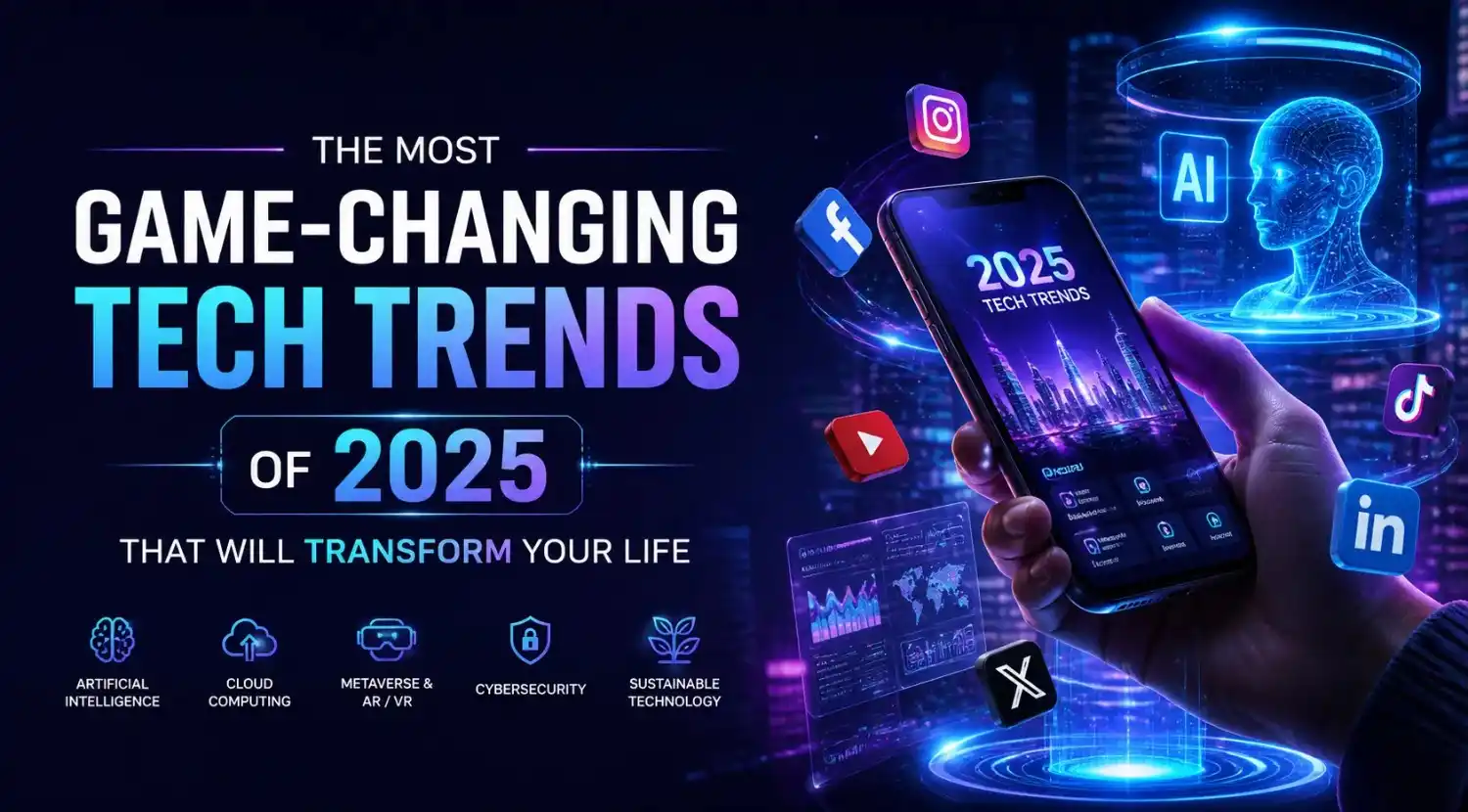
We are living through one of the most accelerated periods of technological change in human history. Every decade brings innovation, but 2025 feels different — this is the year when ideas that once lived only in science fiction are stepping firmly into reality. Artificial intelligence is no longer just answering your questions; it is beginning to act on your behalf. Quantum computers are leaving the laboratory. Medical breakthroughs are rewriting what we thought was possible for the human brain.
Whether you are a student, a professional, a business owner, or simply someone trying to make sense of the world around you, these trends will touch your life. Here is a comprehensive breakdown of the most game-changing technology trends of 2025 and what they actually mean for you.
1. Agentic AI: Artificial Intelligence That Acts, Not Just Answers
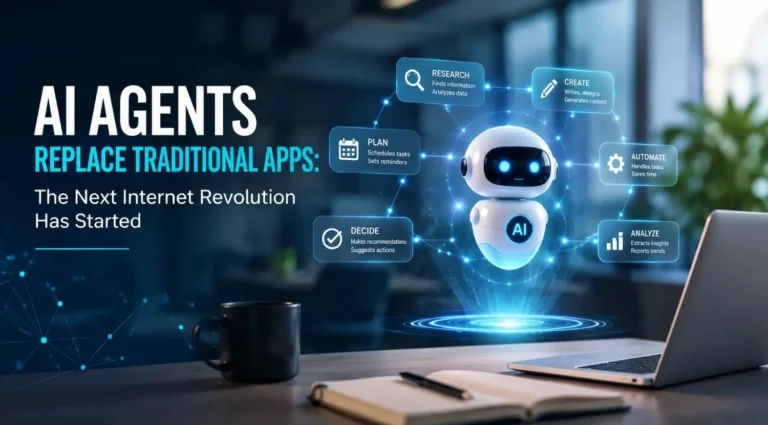
For the past few years, AI has functioned primarily as a very sophisticated search engine — you ask, it answers. That era is ending. In 2025, the dominant shift in artificial intelligence is toward what researchers and technologists call “agentic AI”: systems that do not just respond to prompts but autonomously plan, decide, and execute tasks on your behalf.
Imagine an AI that books your travel arrangements, drafts and sends emails, manages your calendar, monitors your finances, and completes multi-step work projects — without you needing to supervise every action. This is not a distant projection. According to a global survey by Capgemini, 70 percent of executives and 85 percent of investors named AI agents as one of the top three most impactful technologies for 2025.
Accenture’s Tech Vision 2025 report describes this shift as companies building “cognitive digital brains” — integrated AI systems that encode institutional knowledge, workflows, and decision-making in ways that allow them to operate with genuine autonomy at a higher level than ever before.
For individuals, this means the gap between those who know how to work with AI agents and those who do not will widen rapidly. For businesses, it means entire categories of repetitive knowledge work will be restructured. The question is no longer whether AI will change your job — it is how quickly you will adapt.
2. Quantum Computing: A Fundamentally Different Kind of Processing Power
Classical computers — including the one in your smartphone — operate using bits, each of which is either a 0 or a 1. Quantum computers use qubits, which can exist as 0 and 1 simultaneously through a property called superposition. This allows quantum machines to explore enormous numbers of possibilities at once, making them exponentially more powerful for certain categories of problems.
In 2025, quantum computing is crossing a meaningful threshold from theoretical promise to practical application. IBM’s Qiskit framework and Google’s error-corrected qubits have made quantum systems more stable and usable than at any prior point. Startups, universities, and governments are all accelerating investment in this space.
The implications are far-reaching. In pharmaceuticals, quantum computers will be able to simulate molecular interactions at a level of precision that classical computers cannot achieve, dramatically speeding up drug discovery. In cybersecurity, quantum computing threatens to break the encryption standards that currently protect global banking, communication, and government systems — which is why the race to develop quantum-safe cryptography is already underway. In artificial intelligence, quantum algorithms will allow models to train faster and identify patterns in data that are currently invisible.
Quantum computing will not change your life tomorrow. But the infrastructure being built today will shape the digital world of the next decade in ways that touch everything from the security of your personal data to the availability of new medicines.
3. Medical Breakthroughs: GLP-1 Drugs and the Unexpected Path to Brain Health
Technology is not limited to screens and software. One of the most surprising and significant tech trends of 2025 comes from the intersection of pharmacology and neuroscience.
GLP-1 receptor agonists — a class of drugs originally developed to manage type 2 diabetes and obesity — are demonstrating remarkable potential in the treatment of brain-related diseases. Research has shown that these drugs reduce inflammation in the brain and help clear toxic protein buildups that are associated with both Alzheimer’s disease and Parkinson’s disease.
The World Economic Forum’s Top 10 Emerging Technologies of 2025 report highlights this development as one of the most significant emerging technologies of the year. With more than 55 million people globally living with dementia, and that number expected to grow substantially as populations age, an effective treatment pathway would represent one of the most consequential medical advances in generations.
The broader technology story here is about how AI is accelerating drug discovery — helping researchers identify new applications for existing compounds, model disease pathways, and design clinical trials faster than was possible even five years ago. The convergence of AI and medicine is not a future event. It is happening now.
4. Spatial Computing: When the Physical and Digital Worlds Merge
Spatial computing describes the integration of augmented reality, virtual reality, the Internet of Things, and AI-driven analytics into a seamless layer that bridges physical and digital experience. Rather than interacting with a screen, spatial computing environments respond to your physical surroundings and overlay useful digital information onto the real world.
Deloitte’s Tech Trends 2025 report identifies spatial computing as a game-changer for both businesses and individuals. The applications are not limited to consumer entertainment. A surgeon wearing AR glasses can view a patient’s real-time imaging data overlaid directly onto the surgical field. A factory technician can receive step-by-step repair instructions projected onto the machine in front of them. An architect can walk through a building that exists only as a digital model, experiencing its scale and proportions before a single brick is laid.
Alongside spatial computing, collaborative robots — known as cobots — are advancing rapidly. These are AI-powered machines designed to work alongside humans rather than replace them, enhancing productivity and safety in industrial settings. According to Globant’s Tech Trends 2025 report, by 2030 approximately 80 percent of people will interact with smart robots on a daily basis.
5. AI-Powered Cybersecurity: The Double-Edged Sword
The same artificial intelligence that is making our systems smarter is also making the threats against those systems more dangerous. In 2025, cybercriminals have access to AI tools that can generate convincing phishing emails, create realistic deepfake videos, and automate attacks at a scale that human operators alone could never achieve.
The defense, however, is also AI. In a survey of industry executives conducted by Capgemini, AI and generative AI in cybersecurity ranked first out of more than 60 technology trends for 2025. Organizations are deploying machine learning systems that can detect anomalies in network behavior, identify fraudulent transactions in real time, and respond to threats faster than any human security team.
One of the most practically important innovations in this space is AI content watermarking. This technology embeds invisible digital signatures into AI-generated text, images, and video, allowing platforms and individuals to verify what is real and what has been artificially created. As deepfakes become increasingly indistinguishable from authentic content, this technology is becoming a critical tool for maintaining trust in digital information.
For ordinary users, the takeaway is clear: the sophistication of digital fraud in 2025 demands a higher level of personal security awareness than most people currently practice.
6. Small Modular Reactors: Powering the AI Economy
This trend is less visible to consumers but deeply consequential in its implications. The energy demands of modern AI systems are staggering. Training a single large language model can consume as much electricity as a small town uses in a week. As AI infrastructure scales globally, traditional power grids are facing serious strain.
Small Modular Reactors (SMRs) are compact nuclear power plants that are significantly safer, cheaper to build, and more flexible in deployment than conventional nuclear facilities. In 2025, investment in SMR technology is accelerating across North America, Europe, and Asia. Several countries are issuing regulatory approvals and breaking ground on pilot installations.
The connection to tech trends is direct: without a reliable, clean, and abundant source of energy, the AI economy cannot sustain its growth trajectory. SMRs are shaping up to be a critical part of the infrastructure that powers the next generation of technology.
7. The Democratization of AI: Powerful Tools for Everyone
Perhaps the most quietly transformative trend of 2025 is not a specific technology but a shift in who has access to powerful technologies. For most of the past decade, cutting-edge AI systems were available only to large corporations with the resources to build and maintain them. That is changing rapidly.
Deloitte’s Tech Trends 2025 report articulates this shift by predicting that AI will eventually become as invisible and universal as the internet itself — not something you consciously use, but something that makes everything around you work smarter and faster. Smaller language models tailored for specific tasks are making AI more efficient, affordable, and accessible. Independent developers, small businesses, educators, and individuals in emerging markets are gaining access to tools that were previously out of reach.
This democratization has particular significance in regions where large portions of the population are coming online for the first time. AI-powered tools that work across languages and require minimal technical expertise are opening doors to information, commerce, and education that were previously closed.
What This Means for You: Practical Takeaways
Understanding these trends is the first step. Acting on that understanding is what separates people who are carried along by technological change from those who benefit from it.
Start by building genuine familiarity with AI tools — not a surface-level awareness, but a working understanding of what they can and cannot do. Pay closer attention to your digital security hygiene, because the tools available to bad actors in 2025 are far more sophisticated than they were even two years ago. Pay attention to how your industry is being reshaped by automation and AI, and position yourself toward the aspects of your work that require judgment, creativity, and human relationship — these are the areas where human value is most durable.
Technology in 2025 is not waiting. The gap between those who understand these shifts and those who do not will compound over time.
Conclusion
The technology trends defining 2025 — agentic AI, quantum computing, medical breakthroughs, spatial computing, cybersecurity innovation, clean energy infrastructure, and the democratization of powerful tools — are not abstract forces operating at a distance. They are reshaping work, health, safety, and daily experience for people at every level of society.
The most important thing you can do in response is to stay curious, stay informed, and resist the temptation to treat any of these developments as someone else’s concern. The future belongs to those who engage with it.